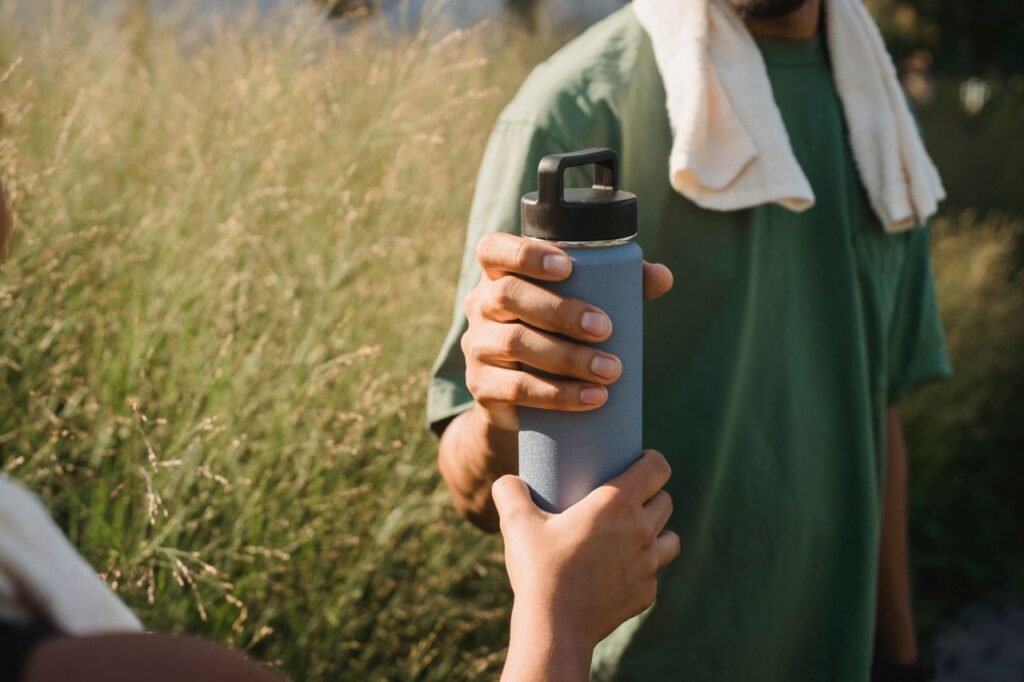
Proper hydration is essential for maintaining physical energy, cognitive focus, digestion, and joint health. Yet, many people spend their days mildly dehydrated, mistaking thirst for hunger or waiting until they feel dry before reaching for a glass of water.
Staying hydrated isn’t about gulping down massive amounts of water all at once—it’s about creating consistent, low-friction habits throughout the day.


1. How Much Water Do You Actually Need?
While the classic “8 glasses a day” rule is a good general benchmark, individual fluid needs vary based on body size, climate, and activity levels.
| Factors | Recommended Daily Fluid Intake | Key Notes |
| General Baseline (Men) | ~3.7 Liters (125 oz) total fluids | Includes water from food and all beverages. |
| General Baseline (Women) | ~2.7 Liters (91 oz) total fluids | Roughly 20% of daily intake comes from water-rich foods. |
| Active / Hot Climates | Add 0.5–1 Liter per hour of exercise | Adjust based on sweat loss and ambient temperature. |
Note: The simplest way to gauge your hydration level is by checking your urine color—aim for a pale, straw-like yellow.
2. Step-by-Step Daily Hydration Schedule
3. Smart Strategies to Overcome Hydration Hurdles
-
Bored with Plain Water? Add natural flavor enhancers like fresh lemon slices, cucumber, mint leaves, or frozen berries without adding artificial sugar.
-
Balance Electrolytes for Heavy Sweat: If you exercise heavily or spend hours outdoors, plain water might not suffice. Add a pinch of sea salt or an electrolyte powder to maintain proper sodium-potassium balance.
-
Front-Load Your Intake: Drink the majority of your daily water goal between morning and late afternoon. Taper off fluid intake 1–2 hours before bedtime to prevent sleep disruptions from late-night bathroom trips.