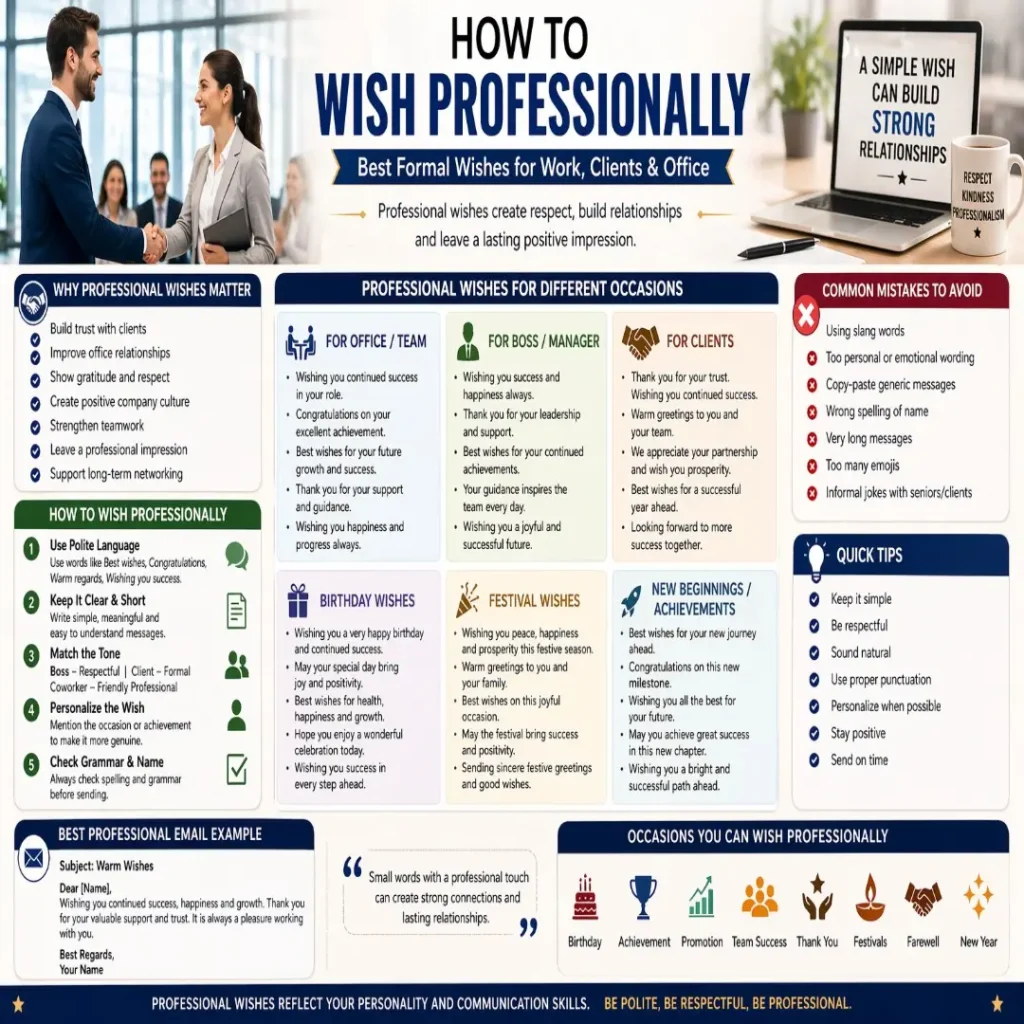
How to Wish Professionally is an important skill that helps people communicate with respect, confidence, and professionalism in workplaces and business environments. Professional wishes help people communicate with respect, confidence, and professionalism in workplace and business environments. Thoughtful messages can create positive impressions and strengthen relationships over time.
Professional wishes should be polite, warm, respectful, and easy to understand. You do not need fancy language. Even simple words spoken sincerely can leave a lasting impact.
Why Professional Wishes Matter
Professional greetings play a major role in business communication. They reflect respect, communication style, and professional behavior. A thoughtful message can improve your image, strengthen workplace relationships, and create a positive impression.
Whether you are communicating with a client, manager, coworker, or business partner, professional wishes help build trust and goodwill over time. They also encourage better communication, show appreciation, and support long-term professional connections.
Professional wishes can help
- Build stronger workplace relationships
- Create a positive and professional impression
- Show appreciation and respect
- Improve communication with colleagues and clients
- Develop trust and goodwill over time
- Support long-term professional connections
🤝 Formal vs Friendly Workplace Communication
The tone of a professional wish should depend on the relationship. Messages for clients, managers, senior professionals, and official business communication usually require a formal and respectful approach. On the other hand, wishes for coworkers and teammates can be slightly warmer and more friendly while still maintaining professionalism.
💡 5 Golden Rules on How to Wish Professionally
1. Use Polite and Professional Language
Professional wishes should sound respectful, positive, and easy to understand. Simple phrases such as Best wishes, Warm regards, Congratulations, or Wishing you continued success usually work well in professional communication.
2. Keep It Clear and Short
Business messages should be simple and direct. Long emotional paragraphs are usually unnecessary.
3. Match the Tone
The tone of your message should match the relationship. A wish for a client or manager should be more formal, while a message for a coworker can be slightly warmer and more conversational without losing professionalism.
4. Personalize the Wish
Mention their event or achievement. Personalized messages feel more genuine.
5. Check Grammar and Name
Always confirm spelling of names and avoid grammar mistakes.
✨ Why Simple Professional Wishes Work Better
Simple and respectful messages are easier to understand and feel more genuine. In professional communication, clarity and sincerity usually create a stronger impact than overly complicated wording.
💼 Situation-Based Professional Wishes & Templates
💼 Professional Wishes for LinkedIn
LinkedIn greetings are commonly used for promotions, achievements, work anniversaries, and career milestones. The best LinkedIn wishes are professional, positive, and focused on the person’s accomplishment rather than personal details.
🏆 Professional Wishes for Achievements
Your dedication and hard work have truly paid off. Congratulations on this achievement.
Congratulations on your well-deserved success.
Wishing you continued growth and achievements ahead.
Your hard work and dedication are truly inspiring.
Office Wishes for Coworkers & Teammates
- Wishing you continued success in your role.
- It has been a pleasure working with you.
- Wishing you all the best for the opportunities ahead.
- Thank you for your support and guidance.
- Wishing you happiness and progress always.
- Best wishes for your future growth and success.
Professional Wishes for Corporate Clients
- Thank you for your trust. Wishing you continued success.
- Warm greetings to you and your team.
- Best wishes for a successful year ahead.
- We appreciate your partnership and wish you prosperity.
- Looking forward to more success together.
Respectful Wishes for Boss or Manager
- Wishing you success and happiness always.
- Thank you for your leadership and support.
- Your leadership and professionalism set a great example for the entire team.
- Your guidance inspires the team every day.
Formal Birthday Wishes in the Workplace
Workplace birthday wishes should remain warm, respectful, and professional.
- Wishing you a very happy birthday and continued success.
- May your special day bring joy and positivity.
- Best wishes for health, happiness, and growth.
- Hope you enjoy a wonderful celebration today.
How to Wish Professionally for Festivals
Festival wishes are common in offices and businesses.
- Wishing you peace, happiness, and prosperity this festive season.
- Warm greetings to you and your family.
- Best wishes on this joyful occasion.
- May the festival bring success and positivity.
📧 Ready-to-Use Professional Email Wish Template
Subject: Warm Wishes
Dear [Name],
Wishing you continued success, happiness, and professional growth. Thank you for your trust and support. It is always a pleasure working with you, and we look forward to continued success together.
Best Regards,
[Your Name]
FAQ – How to Wish Professionally
How do you wish professionally?
Use clear, polite, respectful, and warm language.
Can I wish clients formally?
Yes, formal wishes are ideal for clients.
Should professional wishes be short?
Yes, short and meaningful wishes usually work best.
Can I use emojis in professional wishes?
Use minimal or avoid them for formal messages.
Why are professional wishes important?
They build trust, goodwill, and better workplace relationships.
How do I make a professional wish more personal?
You can add the person’s name, achievement, or specific situation to make it more meaningful.
Can I use professional wishes on LinkedIn?
Yes, professional wishes are perfect for LinkedIn to maintain a professional image.
Conclusion
Knowing How to Wish Professionally can improve your image in office and business life. A thoughtful greeting shows maturity, kindness, and respect. Whether you are writing to a client, coworker, manager, or business partner, polite wishes always make a strong impression.
In professional life, small respectful messages often leave a stronger impact than long conversations. Thoughtful wishes help people feel valued and respected.
🌟 Related Helpful Guides
Success Wishes for Friends & Business
Use these professional wishing tips and examples to communicate more respectfully, confidently, and effectively in personal and business situations. You can also explore additional resources on professional communication and workplace etiquette for deeper understanding.