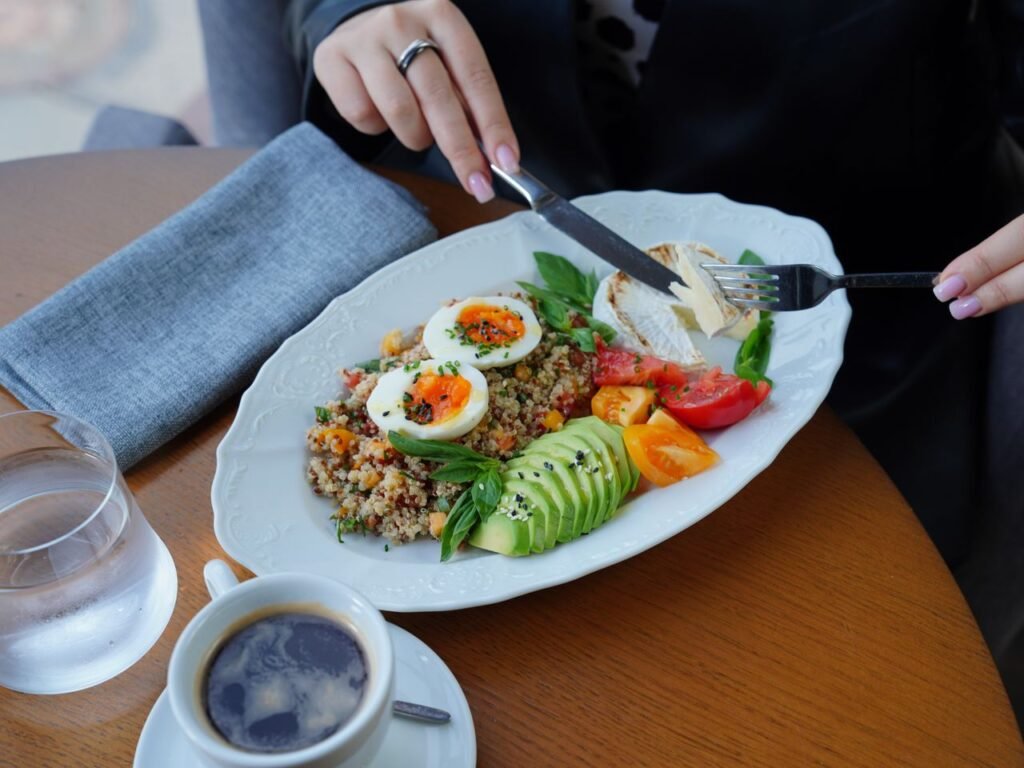
Eating a healthy, nutrient-dense diet doesn’t require tracking every gram of food or following complex calorie-counting equations. The Healthy Plate Method translates nutritional guidelines into a simple visual template you can use at home, at a restaurant, or while traveling.
By dividing your plate into clear proportion zones, you ensure every meal delivers sustained energy, steady blood sugar, and essential vitamins.
1. The Core 50-25-25 Rule
A balanced meal relies on proportional macronutrient distribution across three primary sections of a standard 9-inch dinner plate:
| Section | Target Proportion | Primary Function | Ideal Food Choices |
| Vegetables & Fruits | 1/2 of Plate | Provides fiber, micronutrients, and hydration with minimal calories | Spinach, broccoli, peppers, cucumbers, berries, and leafy greens |
| Lean Protein | 1/4 of Plate | Maintains muscle mass, boosts satiety, and slows digestion | Chicken, eggs, tofu, lentils, fish, paneer, and beans |
| Complex Carbohydrates | 1/4 of Plate | Delivers primary cellular energy and brain fuel | Brown rice, whole wheat roti, quinoa, sweet potatoes, and oats |
2. Step-by-Step Guide to Assembling Your Plate
3. Practical Portion Hand Guide
When you don’t have a structured plate nearby, your hand serves as an instant, personalized portion measuring tool:

-
Vegetables: 2 Cupped Hands = 1 Serving
-
Protein: 1 Open Palm = 1 Serving (~20–30g)
-
Carbohydrates: 1 Cupped Hand = 1 Serving
-
Healthy Fats: 1 Entire Thumb = 1 Serving (~1 tbsp)
4. Easy Swap Guide for Popular Diets
[Standard Meal Plate]
🥗 1/2 Salad & Roasted Veggies
🍗 1/4 Grilled Chicken or Tofu
🌾 1/4 Brown Rice or Whole Wheat Roti

[Plant-Based / Vegetarian Plate]
🥗 1/2 Sauteed Spinach & Bell Peppers
🫘 1/4 Lentils (Dal), Chickpeas, or Edamame
🥔 1/4 Quinoa or Sweet Potato
-
Hydration Rule: Pair your plate with water, unsweetened tea, or plain buttermilk instead of sugary sodas or fruit juices.